
Essai virtuel de bagues basé sur l'IA pour les marques de bijoux : ce qui différencie Tangiblee
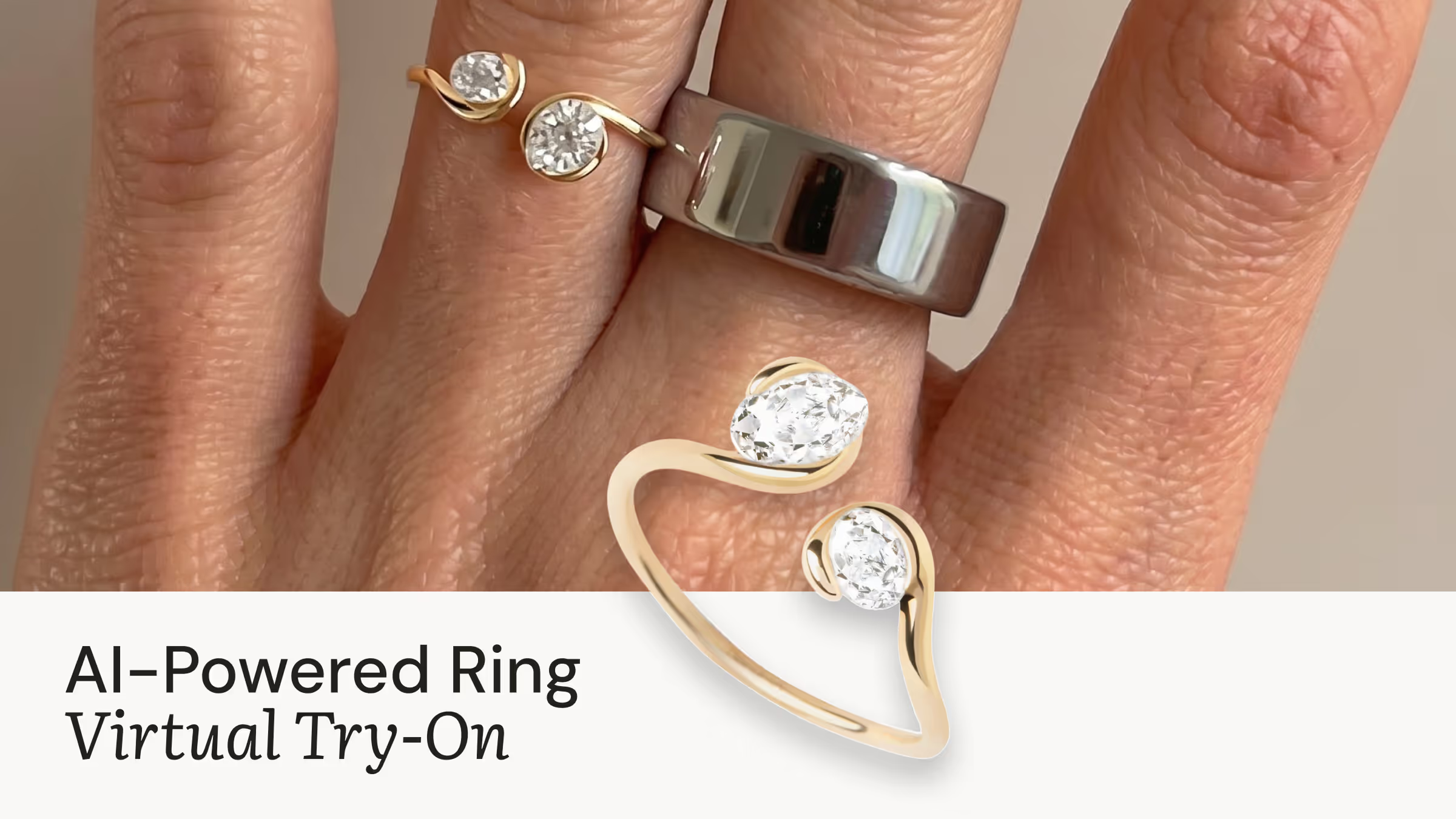
Les marques de bijoux qui explorent l'essayage virtuel se posent souvent la même question : qu'est-ce qui rend une solution VTO meilleure qu'une autre ?
Le VTO peut prendre différentes formes. Certaines solutions sont basées sur la réalité augmentée classique. Certains s'appuient sur un essai virtuel basé sur des images 2D. Certains sont conçus pour fournir une sortie de qualité supérieure sous plusieurs angles. Chaque approche tente de résoudre le même défi fondamental : aider les acheteurs à mieux comprendre le produit avant de l'acheter.
Nous avons déjà couvert les différences entre la réalité augmentée classique et le clip VTO de Tangiblee dans un article séparé. Ici, nous voulons nous concentrer sur autre chose : comment l'essai virtuel de bagues basé sur l'IA peut devenir une solution évolutive et réaliste pour les marques de bijoux et les détaillants qui recherchent plus qu'une fonctionnalité brillante.
Car pour la plupart des marques, l'objectif n'est pas de lancer le VTO sur quelques produits pour le qualifier d'innovation. L'objectif est de le rendre disponible dans l'ensemble du catalogue, de garantir la crédibilité des résultats et d'éviter de créer plus de travail pour les équipes internes. C'est là que l'essai virtuel en anneau de Tangiblee, alimenté par l'IA, se démarque.
Pourquoi l'essai virtuel de bagues réalistes est important pour les marques de bijoux
Il est facile de dire qu'une solution est alimentée par l'IA. Il est beaucoup plus difficile de donner l'impression que le résultat est réel.
Et dans le domaine des bijoux, cette différence est importante immédiatement.
Un acheteur qui regarde une bague en ligne ne se demande pas si la technologie sous-jacente est impressionnante. Ils posent une question plus simple : Puis-je me fier à ce que je vois ?
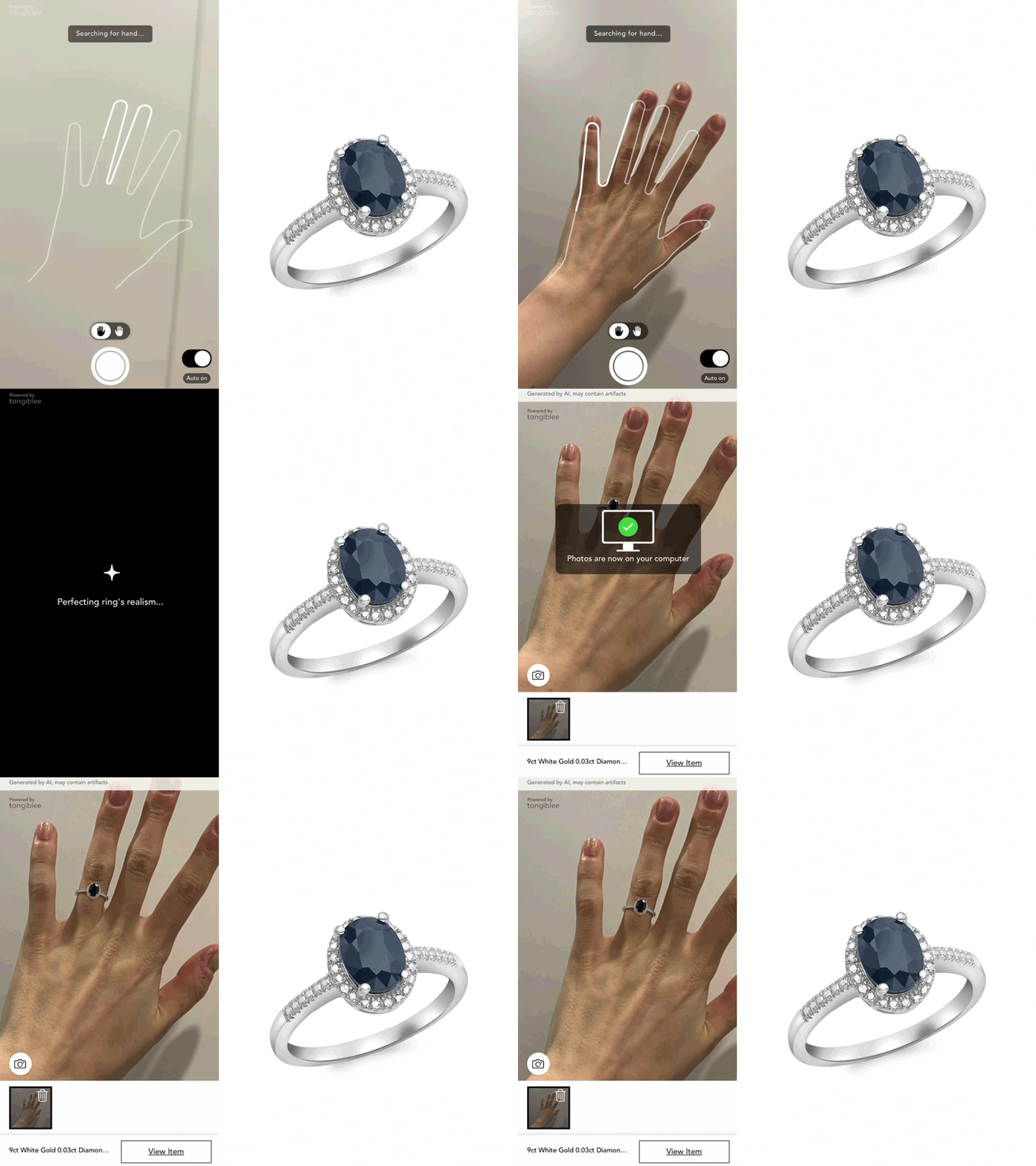
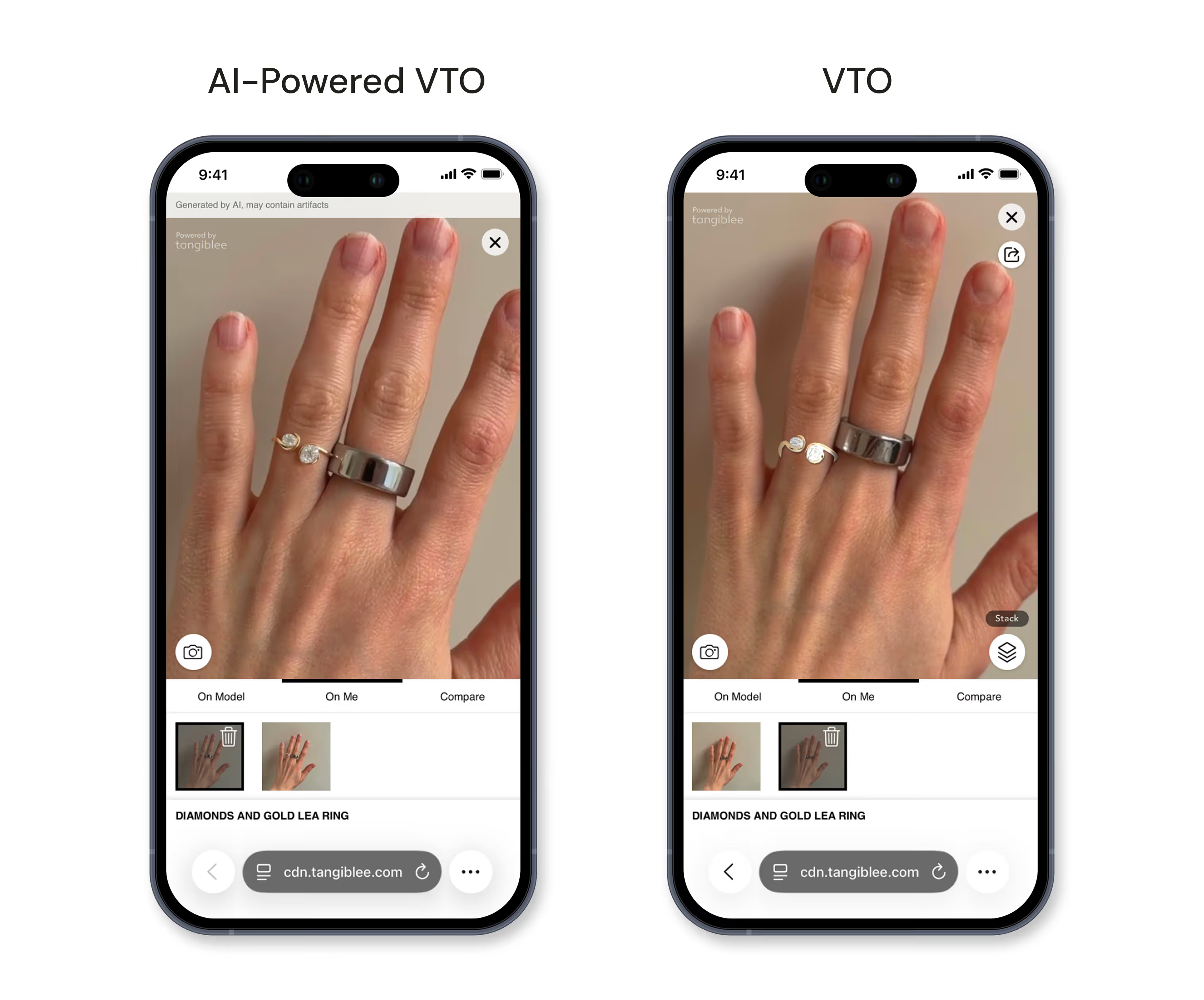
Si le résultat semble faux, l'expérience cesse d'être utile. S'il semble naturel et visuellement crédible, il commence à faire ce que l'essai virtuel est censé faire : aider l'acheteur à comprendre le produit en toute confiance.
C'est pourquoi la bague VTO de Tangiblee, alimentée par l'IA, donne la priorité au réalisme. La bague doit toujours ressembler à celle que vous montrez sur la page détaillée de votre produit. Le résultat obtenu doit être suffisamment net, crédible et précis pour étayer la décision d'achat.
1. Conçu pour les bijoux, pas pour une sortie IA générique
Les bijoux ne sont pas une catégorie où la sortie générique de l'IA est suffisante. Les bagues sont des produits sensibles aux détails. De petites différences d'échelle, d'angle, de placement et d'apparence générale peuvent modifier la fiabilité de l'expérience. Un résultat qui peut sembler acceptable dans une autre catégorie peut sembler peu convaincant en bijouterie presque immédiatement.
C'est pourquoi l'expérience des catégories est importante.
L'approche de Tangiblee est façonnée par des années d'expérience dans l'essayage virtuel de bijoux. Il ne s'agit pas d'une IA appliquée aux bijoux après coup. Il s'agit d'une IA appliquée à un problème que Tangiblee connaît déjà bien : comment offrir aux acheteurs de bagues un meilleur contexte visuel avant l'achat.
2. Pourquoi le modèle de service géré de Tangiblee est important
L'un des principaux avantages pratiques du VTO en anneau alimenté par l'IA de Tangiblee (et de toutes les autres solutions Tangiblee) est le peu de choses à faire pour la marque.
Tangiblee fonctionne à partir d'une seule image de produit déjà présente sur votre PDP. Il n'est pas nécessaire de créer des modèles 3D, de créer des ressources d'essai spéciales, de gérer les invites ou de revoir les résultats un par un. Tangiblee explore votre site Web, traite les images de produits existantes et propose l'expérience sous la forme d'un service géré.
Cela signifie que vos équipes de commerce électronique, de création et de commercialisation peuvent rester concentrées sur leurs priorités habituelles pendant que Tangiblee s'occupe de la couche VTO. Pour les marques, cela facilite grandement la prise en charge du déploiement en interne et sa mise à l'échelle.
3. Conçu pour une couverture complète du catalogue
De nombreuses solutions VTO peuvent être belles lors d'une démonstration. La question la plus difficile est de savoir s'ils peuvent fonctionner sur l'ensemble du catalogue. C'est là que le modèle de Tangiblee devient particulièrement utile.
Étant donné que la solution fonctionne à partir d'images PDP existantes et est entièrement gérée par Tangiblee, les marques disposent d'une méthode plus pratique pour activer la VTO sur un plus grand nombre de SKU sans créer un nouveau flux de production en coulisse.
C'est important car la valeur de l'essai virtuel augmente avec la couverture. Une expérience VTO sur une poignée de produits peut être intéressante. Une expérience VTO réaliste disponible sur l'ensemble du catalogue est bien plus significative à la fois pour la marque et pour l'acheteur.
.avif)
4. Meilleure commercialisation des PDP avec moins de charge opérationnelle
Une expérience d'essai virtuelle performante devrait améliorer le PDP sans créer de contraintes opérationnelles supplémentaires pour les équipes internes.
Tangiblee est conçu pour cet équilibre. L'expérience s'intègre à votre site Web et à l'imagerie actuelle de vos produits, ce qui permet aux marques de proposer des essais réalistes au PDP sans les habituelles querelles d'actifs, l'extension du flux de travail ou la supervision manuelle qui ralentissent souvent l'adoption.
.avif)
La valeur commerciale est simple
Le but de l'essai virtuel en anneau n'est pas d'ajouter de la technologie pour le plaisir de la technologie. Il s'agit d'aider les consommateurs à prendre de meilleures décisions. Lorsque le résultat semble crédible, les acheteurs obtiennent un contexte du produit plus clair. À mesure que le contexte du produit s'améliore, les hésitations ont tendance à diminuer.
Et lorsque les marques peuvent proposer cette expérience sur une plus grande partie du catalogue sans ajouter de complexité interne, la solution devient plus facile à justifier sur le plan commercial.
C'est pourquoi le VTO basé sur l'IA de Tangiblee pour sa bague est important. Il combine des résultats réalistes, une approche spécifique à la joaillerie et un modèle de déploiement géré d'une manière qui convient aux véritables équipes de commerce électronique.
Les solutions basées sur l'IA ne sont pas toutes créées de la même manière.
Pour les marques de bijoux, la meilleure solution n'est pas simplement celle qui dit « IA ». C'est celui qui a l'air crédible, qui fonctionne parfaitement sur le PDP, qui s'adapte à l'ensemble du catalogue et qui s'adapte aux réalités de l'exécution du commerce électronique.
C'est là que Tangiblee se distingue.
Nous connaissons les bijoux. Nous savons comment les acheteurs l'évaluent en ligne. Et nous savons comment transformer des produits difficiles à évaluer sur un écran en expériences claires, réalistes et prêtes à l'achat.
Découvrez comment Tangiblee rapproche le commerce électronique de bijoux de la réalité et rend l'intangible tangible.
Parce que l'objectif n'est pas simplement de lancer une autre fonctionnalité. Il s'agit d'aider davantage de clients à se sentir suffisamment en confiance pour acheter la bague.