
Represent All Your Customers With Interactive Adjustable Models
What's your return rate?
According to a 2020 survey by shipping and logistics software vendor Shippo, the average return rate for retailers is roughly 7 percent. It should go without saying that you want to be as far below average as possible, but how exactly can you do so?
Simple — by starting with your product pages. How well do they represent your products to your audience? More importantly, do they give prospective customers a clear idea of how each item might specifically look on them?
If not, that's a problem.
So, what options do you have? Read on to see how easy Tangiblee makes it for any brand to deploy interactive adjustable models with only a line of code.
People come in all shapes and sizes…
You'd never guess that there are so many different body types solely from shopping online. With most stores, you're lucky if there are even a few photos that don't use one or more of the same generic models you see in every other photo. To an extent, this is understandable, mostly because there's not a whole lot you can do about it with traditional product photography.
After all, it's not as if you can afford to take eight different photographs with eight different models for every single product in your catalog. Photoshoots are expensive enough when all you're doing is taking a few shots per product. While it's definitely admirable to try for greater representation, there's a good chance you don't have the budget to do so.
Unfortunately, that means populating your product pages with a set of photos that likely represent only a cross-section of your customer base. Because people aren't able to picture your products on their own body type, they can no longer shop with confidence. Because they can no longer shop with confidence, they have a far greater chance of feeling dissatisfied — and returning whatever they've purchased.
But what exactly can you do about that?
Tangiblee can help you represent them all
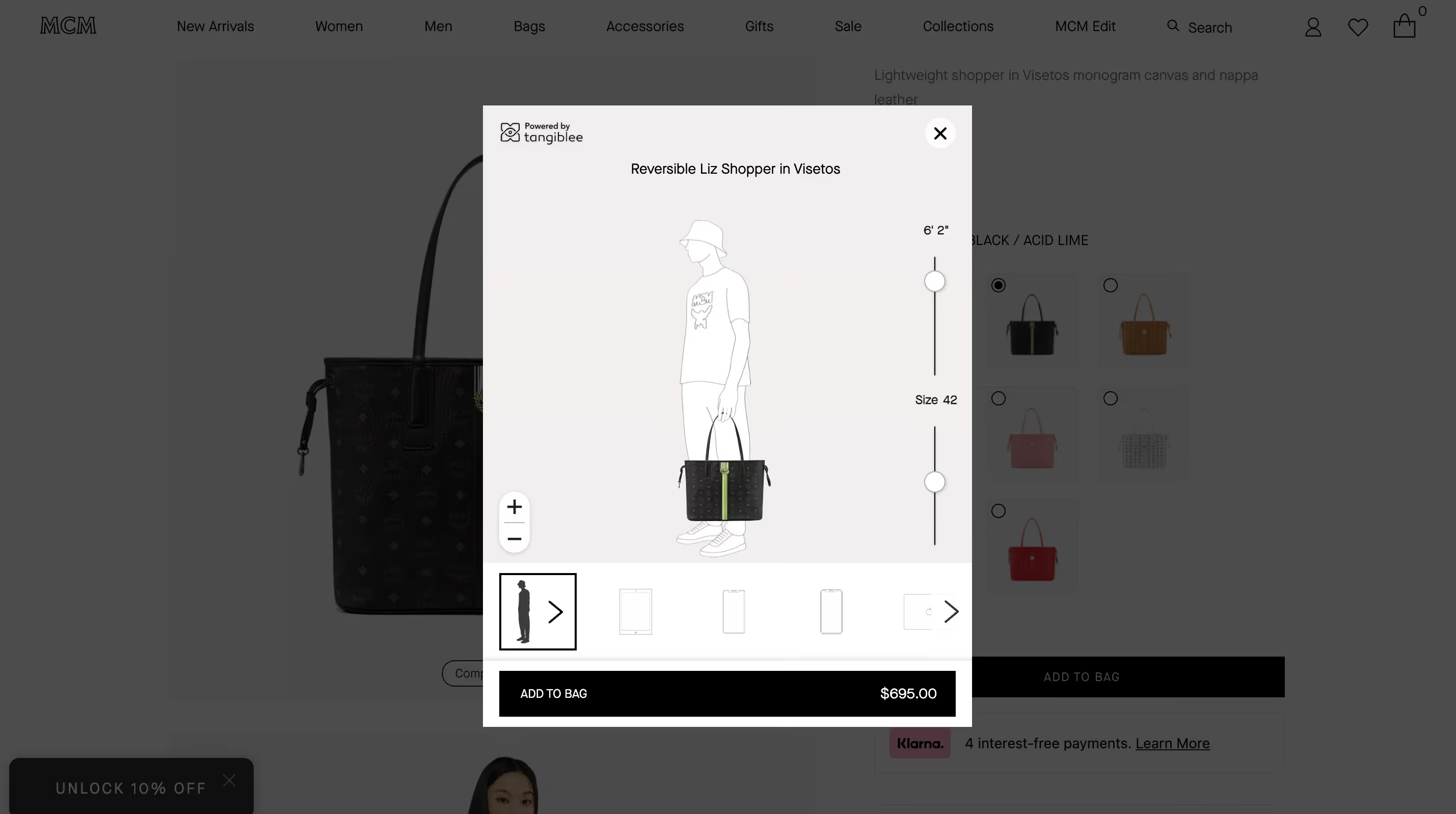
Here's where Tangiblee comes in. Our Adjustable Silhouettes give your customers the opportunity to create virtual product models that directly represent how they actually look. Using the interactive sliders, online shoppers can adjust the height and size of the virtual models.
This gives them a more realistic understanding of how a product will actually look on and fit them. It promotes inclusivity, boosting customer confidence and demonstrating to your audience that you genuinely care about their shopping experience. And best of all, it allows you to accomplish all of this without having to take additional product photos.
Combine Adjustable Silhouettes with some of your own photography, and your customers will have everything they need to buy with confidence.
Alternatively, if you haven't managed to get an appointment set up with a professional photographer, we can help you create photorealistic lifestyle imagery with nothing but a few product photos. No models, no photoshoots, and no need to reshoot your photos every single time you update your catalog.
Tangiblee is designed to be incredibly lightweight. All that's required to get it up and running on your store is a single line of code.
No performance hit, no complicated installation process, and no more second-guessing at checkout.
Encourage customers to buy with confidence through tangiblee
You can do things differently. Stand out from your competitors with a tool that enables greater inclusivity and interactivity while also inspiring customer confidence.
Schedule a free 15-minute live demo now, to see what your platform can really do.