
What Will 2024 Hold for Immersive Media in Retail?
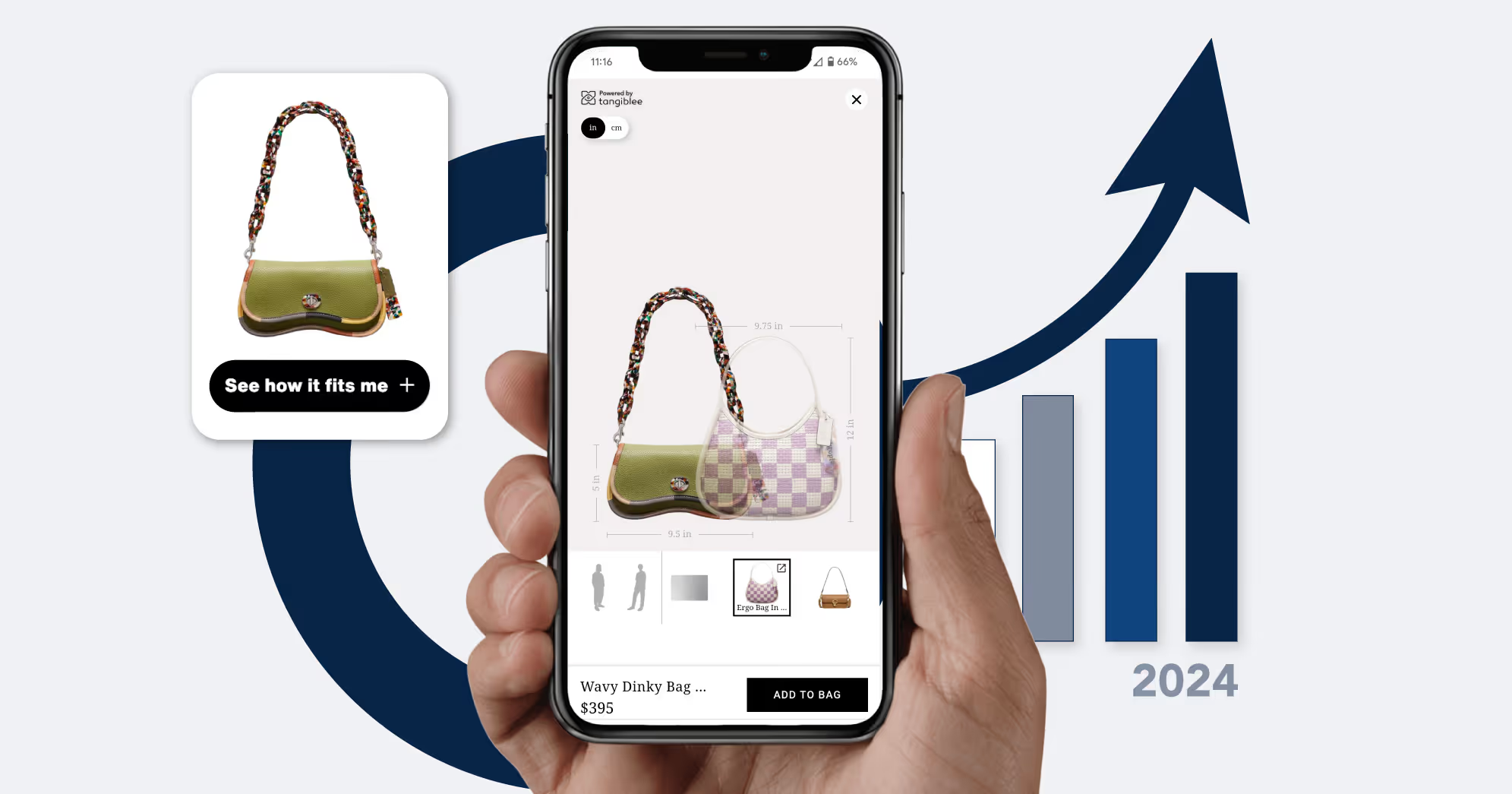
Immersive experiences in retail are booming: market.us estimates that the immersive media market is expected to top $178.7B by 2032.
Want to get ahead of this trend and begin adopting immersive and experiential retail practices before your competition? Here’s how.
What is “Immersive Media”?
Immersive media is a catch-all term for digital technology that brings the best parts of virtual and physical interaction into a single unified experience. Immersive media provides users with dynamic, interactive content which, ideally, increases engagement with content and encourages further exploration. Some of the most prominent subcategories of immersive media include augmented reality (AR) and virtual reality (VR).
What Happened with Immersive Media in 2023?
Circling back to that market.us survey, roughly 13% of the immersive media market in 2023 was attributed to the retail and e-commerce sectors. This adoption was largely driven by the use of AR and VR for product visualization and virtual try-on experiences to enhance online shopping. Beyond this, about 30% of organizations used immersive media technologies for customer engagement, doubling from 15% in 2022. These trends highlight the growing importance of immersive experiences in attracting and retaining customers.
Overall, these trends were much more pronounced in North America, which led the immersive reality market in large part due to a developed tech scene with high demand for real-time and virtual experiences. Asia-Pacific, meanwhile, has the strongest projected compound annual growth rate within the forecast period—keep an eye out for strong regional year-over-year increases for both revenue and investment in the near future.
Emerging Immersive Media Trends for 2024
At present, there are two trends retailers should pay close attention to this year.
First, immersive media will continue to evolve retail and e-commerce through features like 3D product visualization, virtual try-on (VTO), and room visualization. These technologies not only enhance customer decision-making processes but also provide a more interactive shopping experience. This, in turn, has the potential to improve customer confidence, reduce returns, and increase revenue.
As the demand for immersive content continues to grow, we can also expect to see new innovations in content creation tools and platforms. This includes the development of more user-friendly software for creating VR, AR, and 360-degree videos. Consequently, both professionals and amateurs will be better equipped to produce immersive experiences.
The use cases of immersive media remain the same as before: immersive marketing campaigns are becoming increasingly popular among consumers, and with good reason. By using AR and VR to enable interactive advertisements and experiences, businesses can not only enhance customer engagement but also improve the customer journey from start to finish. This has the bonus of improving brand loyalty and potentially leading to higher conversion rates.
Beyond customer outreach, retailers continue to use AR online, bridging the gap between physical and virtual for product categories that include clothes, makeup, accessories, and furniture. Like we mentioned earlier, retailers are increasingly leveraging AR to provide virtual try-on experiences for clothes, makeup, and accessories. Retail brands with brick-and-mortar stores are even taking this a step further by integrating these AR solutions into the in-person shopping experience.
The past few years have been immensely disruptive for retail, and the landscape today is almost unrecognizable from what it was in 2019. The companies that have thrived in the new landscape are those that are able to proactively adapt to and embrace emerging technologies— immersive media is no different in that regard.
Tangiblee: your immersive retail partner
Here’s where we come in—our immersive shopping and augmented reality solutions support some of the top retail brands in the world, allowing them to seamlessly provide better experiences to their shoppers.
We deliver next-gen personalization to shoppers using existing product visuals: customers can engage with and visualize their purchases, whether jewelry, handbags, furniture, or other categories. Your product visuals can also be used to generate dynamic lifestyle content, sparing you the costs associated with professional photoshoots. You can read more about how much we’ll save you on product shoots in our article on delivering Product Imagery at Scale.
Our platform supports over 30 countries, with API integration to weave our solution into your existing recommendation logic—all directly integrated into your website. Our plug-and-play solution requires minimal resources or onboarding and has no impact on page load time or performance.
Book a demo and we'll show you how you can add immersive online experiences to your store with Tangiblee.