
Redefining Retail: Product Imagery at Scale
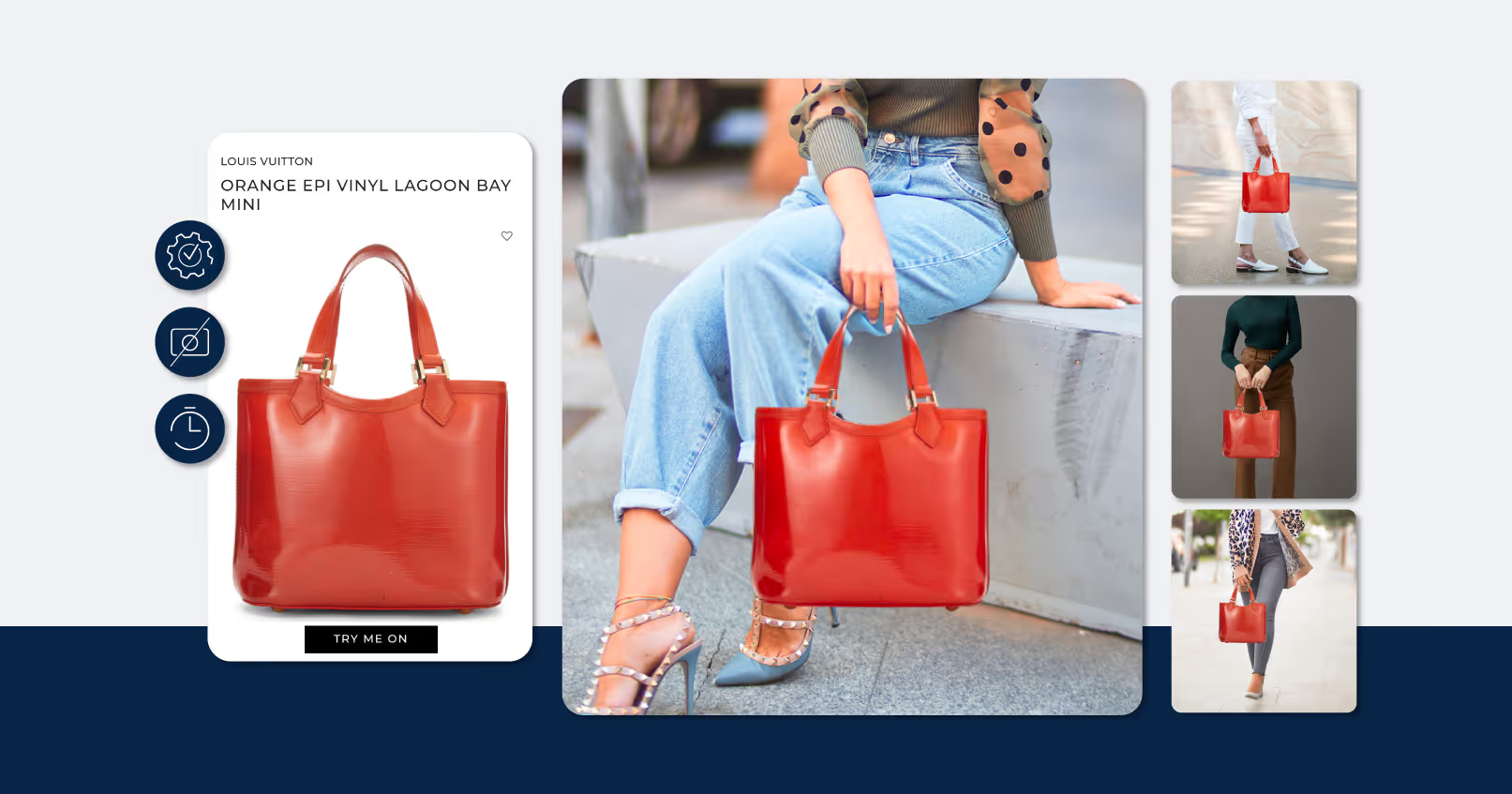
Imagine two e-commerce stores selling the same product—one retailer lists the product with a series of professional and dynamic lifestyle images, while the other uploads a small library of stock photos.
Which of the two do you expect will sell more products?
High-quality product photography and imagery is a must for any online retailer. Since shoppers can't pick up and examine any physical items, they need a way to visualize what you're selling. Unfortunately, keeping an up-to-date library of product photos is an uphill battle.
We'll explain why—and how we can help.
The Problem with Traditional Product Imagery
Keeping product imagery fresh and relevant is both costly and time-consuming. You'll need a commercial photographer, a venue, a crew, and—if you're in fashion or lifestyle—models for your products. All told, you could be looking at over a thousand dollars an hour in overhead for a single product shoot.
Foregoing product imagery altogether isn't really an option, either: the e-commerce industry is more competitive than ever, with worldwide sales expected to break the $6 trillion mark in 2024. To stand out, you need to stay current—which means regular releases of new products with fresh imagery. Per professional photographer Andrea Domjan, this is particularly vital if you're in luxury: product photography remains the best way to showcase your brand value to customers.
E-commerce visuals have a direct impact on perceived value and customer trust. People are generally more willing to spend money on a product with professional, high-end photos—if someone’s first interaction with your brand is highly polished, they’ll infer that your products will have that same level of quality.
Unfortunately, none of this erases the fact that maintaining a manual catalog of images is tedious at best and untenable at worst. Very few brands have the budget and manpower to keep their product photos fresh and dynamic—which is where we come in.
Our Product Visualization Solution
Say goodbye to photoshoots forever: by leveraging AI, our platform is able to take static, 2D product assets and transform them into dynamic images—all while maintaining alignment with your brand aesthetic.
With a single click, you can generate everything from on-model photography to high-end lifestyle images. That's thousands of dollars of potential savings per product listing—and there's no need to worry about scale, either. We've built our platform to support whatever growth our clients might experience: at the moment, we’re equipping retailers with a capacity of up to 5,000 SKUs per day.
Our clients span multiple industries—we’ve worked with Bario Neal for jewelry, Citizen for watches, and Hipvan for furniture. (You can see a full list of case studies in our Case Study Collection.)
A Better Way to Keep Things Visual
Even for smaller brands, maintaining a catalog of high-end product imagery can be incredibly challenging. There's not only the cost of professional photoshoots to consider, but also the time commitment needed to create, edit, and optimize images for each SKU. For retailers with several thousand SKUs, that task can reach herculean proportions.
But that brings us to the good news—there's no need to do product imagery work manually anymore.
Find out how you can automate your product visualization needs with us.