
How Tangiblee Integrates With a Retailer’s Recommendation Logic
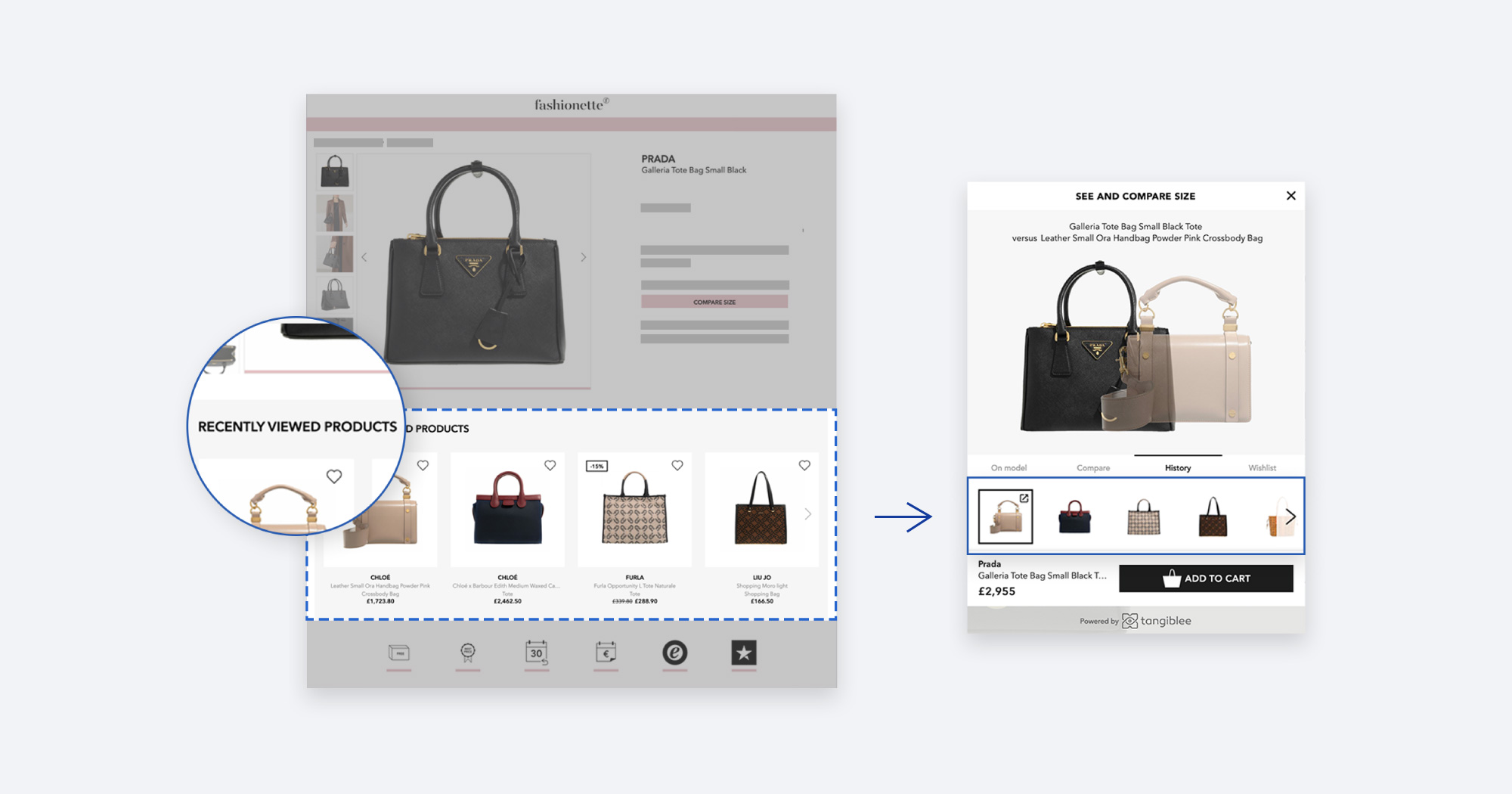
Online shoppers often consider a few different products before making their final buying decision, much like they would try on multiple rings at a jewelry store before deciding which one to purchase. To help make the online buying journey more efficient, many retailers offer personalization platforms where shoppers can go to view various products that they have viewed or favorited.
Tangiblee can now integrate with this existing recommendation logic, which retailers are already paying for, to show recently viewed and wish list items within our experiences using dynamic comparison items.
Tangiblee’s platform integrates with any personalization API, or recommendation API, whether it’s another 3rd party, like Syte, Stylitics, or Dynamic Yield, or any homegrown API developed by the retailer. Our team does the work to integrate with the personalization API, to populate items within Tangiblee’s UX so retailers don’t have to.
“We know how important recommended items are for the shopper’s journey,” stated Eliad Inbar, CEO and Co-Founder of Tangiblee. “To create a truly immersive shopping experience, we added the capability to integrate retailers’ recommendation API into our solution with zero effort from the retailer’s side.”
Thanks to the integration with retailers’ recommendation logic, shoppers are able to compare these recommended products directly against each other for sizing and style. Shoppers can also place these items on lifestyle models or use Virtual Try-On (VTO) with jewelry.

Additionally, shoppers can see a curated list of recommended products from the retailer within the Tangiblee solution. This increases revenue per visitor and conversion rates by presenting shoppers with relevant products that they may also be interested in.
This ability makes Tangiblee the only VTO provider to offer deep connections with recommendation logic. To learn more about this feature and Tangiblee’s solution, schedule a demo here.