
Reduce Bag Returns from Sizing Confusion: The Power of “What Fits Inside” for E-commerce
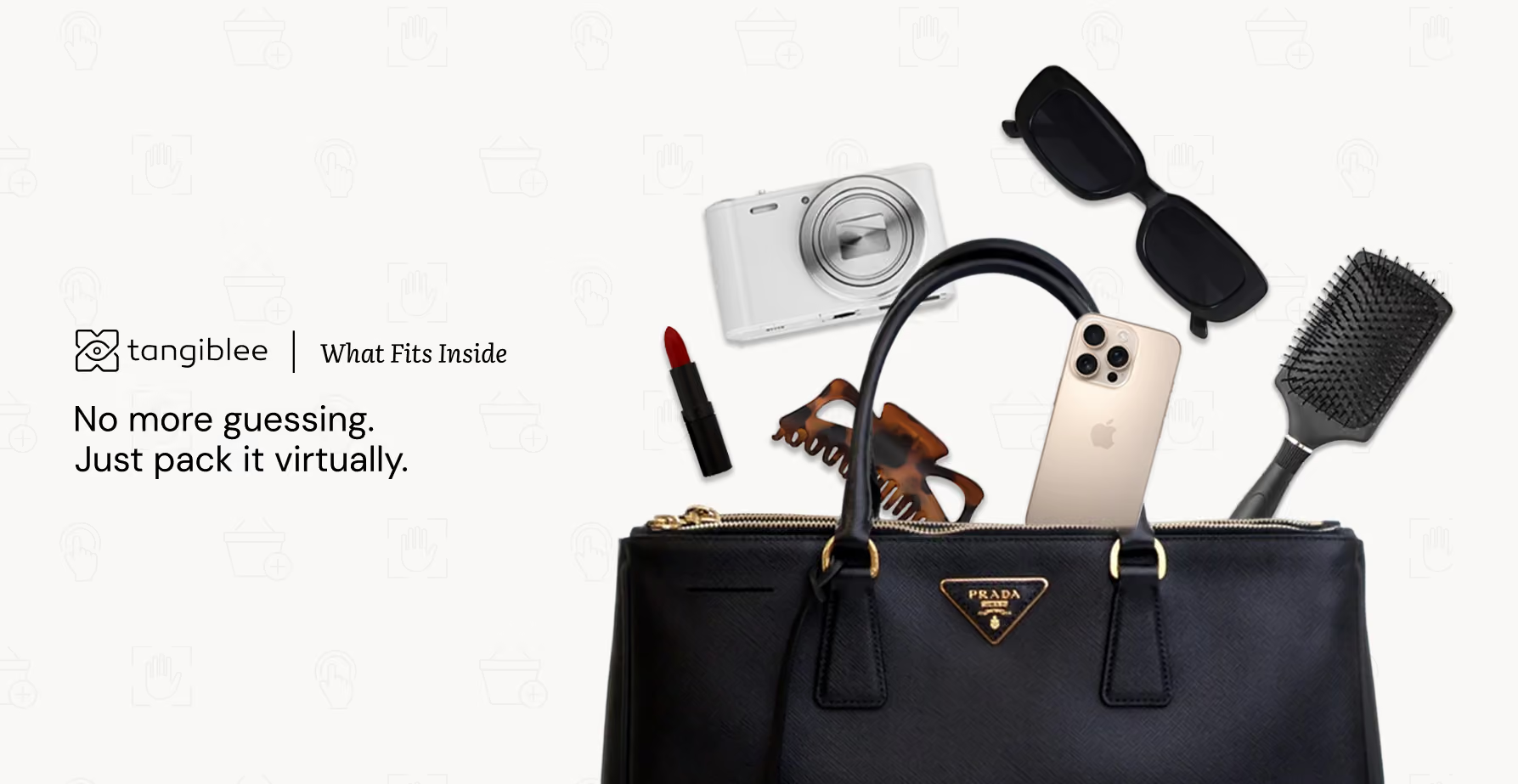
Stop Losing Sales to Size Confusion
If you sell bags online — handbags, backpacks, totes, or even luggage — you’ve likely experienced the same issue:
Shoppers love how the bag looks but return it because it didn’t fit what they expected or the photos of your catalog are flawless: the 360° spin looks excellent. The dimensions are listed. They hit “buy.” And then, the return hits your inbox.
“Didn’t fit my laptop.”
“Smaller than I thought.”
“Not what I expected; looked bigger/smaller.”
Sound familiar? It’s one of the top reasons for returns in the bag category.
You can prevent non-intentional returns when your customer wants a bag that is just not the bag they expected to receive.
Tangiblee has a feature answer to this question.
What Fits Inside (WFI) by Tangiblee works to create the full contextual answer for the customer question while buying bags online.

You can offer beautiful 360° spins if you have 3D models for all your catalog, add detailed measurements to the description. But none of those answer the shopper’s fundamental question:
“Will this fit my laptop, charger, water bottle, and everything I carry daily?”
The result? Confused customers. Unexpected returns. Lost revenue.
Many brands try to solve this by shooting lifestyle images of bags filled with daily-use items. While helpful, this approach has serious drawbacks:
- You’ll need a new photoshoot for every new bag
- It’s costly and time-consuming—especially with catalogs of 1,000+ SKUs
- Seasonal collections and new sizes require repeating the entire process
It’s not scalable. And that’s where Tangiblee’s solution changes everything.
The Scalable Fix: Tangiblee’s “What Fits Inside” (WFI) & WFI Premium
Tangiblee’s WFI and WFI Premium are powerful e-commerce tools that visually show shoppers what fits inside a bag without costly photography.
Instead of relying on static, manually shot images, WFI leverages interactive visual content that accurately represents the items inside your bags. All based on your website imagery.
What is WFI?
WFI (What Fits Inside) brings the in-store experience online. It helps shoppers understand the actual capacity of your products using interactive visuals with real-world items.
Key Benefits:
✅ Works across all bag types: handbags, suitcases, backpacks, totes, etc.
✅ No photography required for daily items
✅ Accurate volume & capacity metrics
✅ Integrates easily as a pop-up or embedded module. Don't make consumers search for an answer—let them look and buy without hesitation.
Results:
- +17.21% lift in Add-to-Cart rate
- +63.42% boost in engagement

What is WFI Premium?
WFI Premium is a separate, enhanced version that adds rich functionality to increase conversions and upsells.
Premium Features:
- Purchasable items inside the bag — then you can add them directly to the cart
- Use curated sets (e.g., “Work Essentials”) or create your own
- Magic Fill button for one-click packing suggestions
- Fully customizable UI to match your brand

Business Impact:
- +11.07% increase in Add-to-Cart rate
- Helps shoppers “pack” the bag virtually and buy with confidence
- Enables cross-selling of accessories and companion products
Why It Matters for Large Catalogs
With Tangiblee's WFI, you eliminate the need to:
- Shoot dozens of items inside every bag
- Stage new sets for each collection
- Continuously reshoot for new sizes or shapes
- Make your customer search for the additional product describtion
Instead, one scalable experience works across your entire product catalog, no matter how often your lineup changes.
What Fits Inside is Perfect for:
- Fashion & handbag retailers
- Travel and luggage brands
- Backpack and school gear sellers
- Any e-commerce store with high return rates due to size issues
Give Your Shoppers the One Thing They Want
Most shoppers don’t return their bags for no reason.
They returned them because they didn’t fit what they needed.
Tangiblee's WFI and WFI Premium answer that question — at scale, without costly photo shoots, and with measurable results.