Skip to main content
Product Features

Innovation Spotlight: What Fits Inside
Tangiblee
Kenzie DeLong
  |  
November 9, 2022
Innovation Spotlight: What Fits Inside

Returns for any reason can be costly in both time and money. They also diminish the customer’s experience and can leave a bad impression. Your customers want to feel confident that their items will fit into their new handbag or luggage. Static images and product dimensions do not provide customers with an accurate understanding of what will fit inside. 

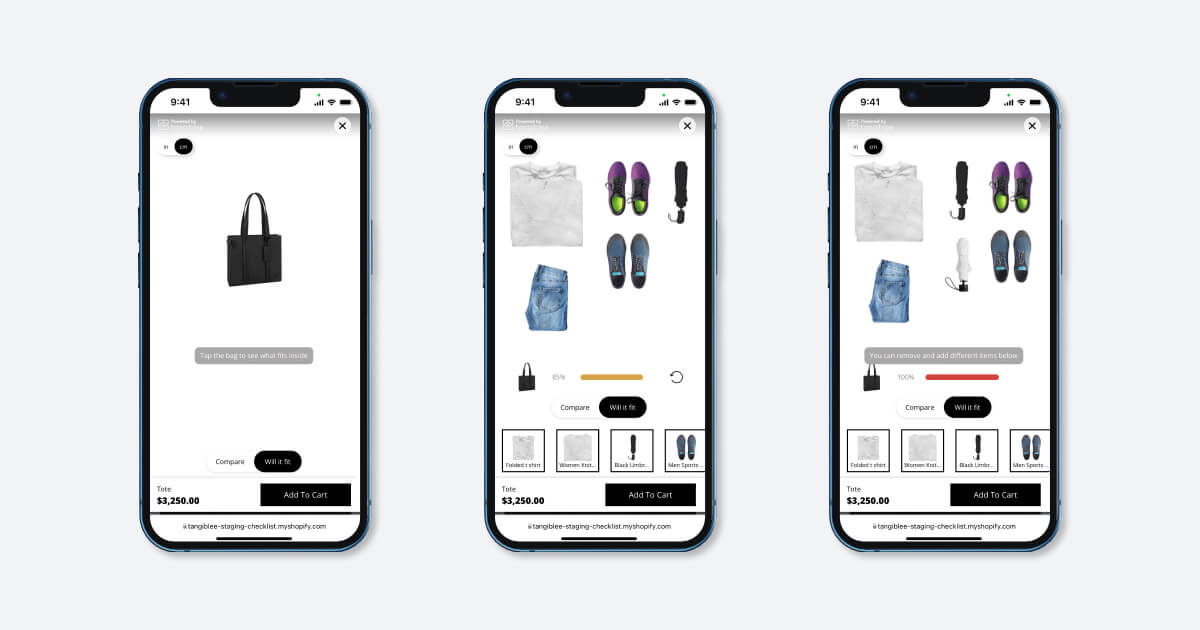
Tangiblee is excited to announce the release of What Fits Inside (WFI). This feature allows customers to visualize what personal or household items will fit inside of their bag. Customers can engage with the feature to add or remove items. They are able to visualize how full the bag is with a moving scale that indicates a percentage of bag capacity. 
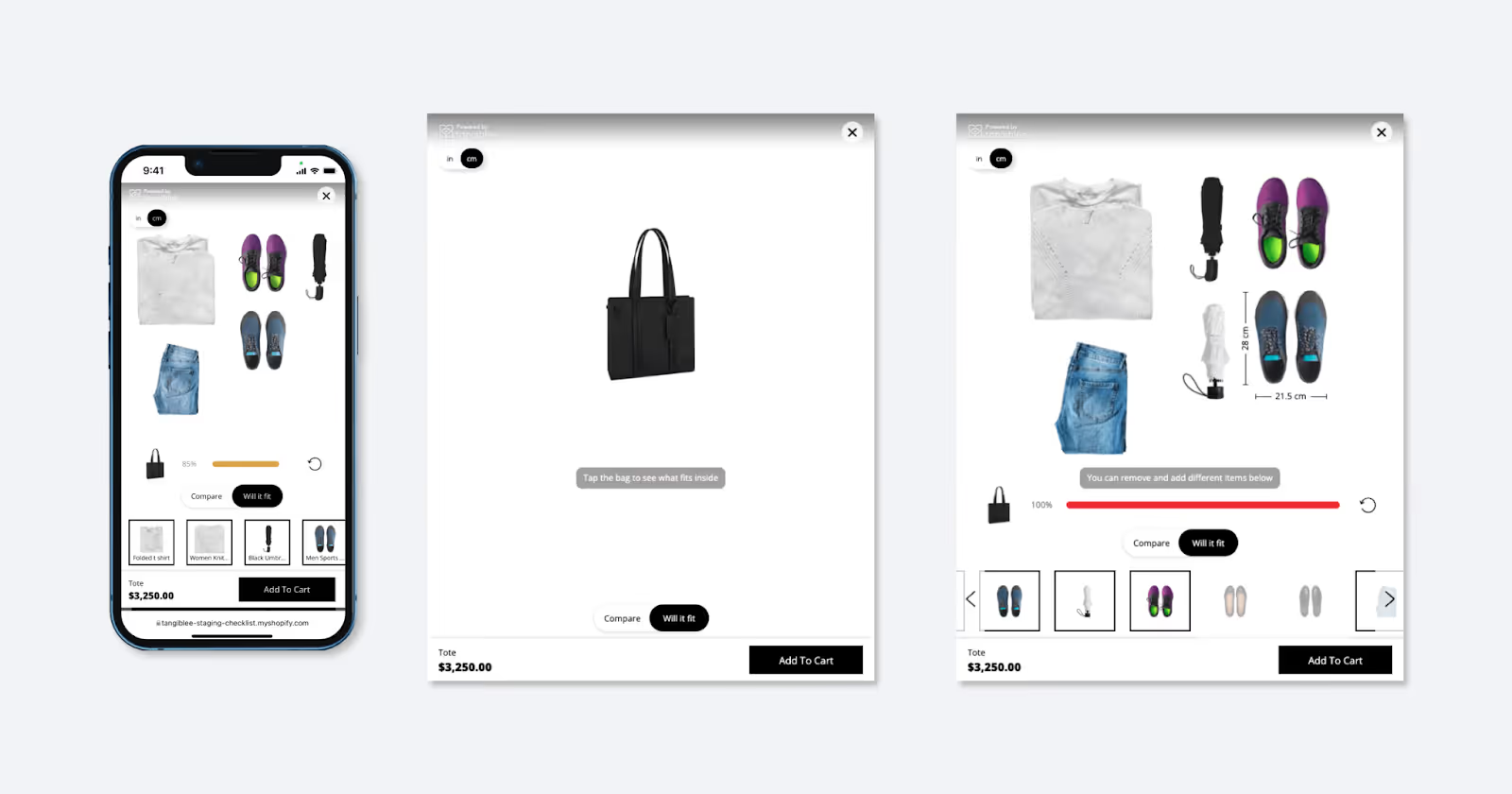
For example, a customer may be looking for a new overnight bag. They want to ensure that two t-shirts, two pairs of shoes, a pair of jeans, and some umbrellas will fit inside. The bag will initially load at 100% capacity, and the customer will be able to unload and load the bag with items of their choosing. 

Looking to elevate your e-commerce site with Tangiblee? Schedule a demo here.

Frequently Asked Qustions

No. Virtual try-on adds a visualization layer on top of a product; it doesn't replace accurate product data or existing imagery. In a quality-checked pipeline, the brand's existing product photo is actually the foundation the result is built from.

It places the brand's real 2D catalog photo of the item onto a hand, wrist, or ear from a reference photo, rather than generating a new image of the product from scratch. The item's proportions and details come from the actual product photo; the AI handles scale, angle, and blending onto the shopper's photo. This is different from older try-on technology, which mapped a manually built 3D or 2D asset onto the shopper using fixed geometric rules, and different from generic AI image generators, which typically synthesize the product rather than place a real photo of it.

We recommend supporting the launch with a dedicated email announcing the new feature, ideally featuring an animated GIF that demonstrates the experience in action and links to a category page with VTO-enabled products.

To build broader awareness, homepage visibility is also important. Banners or other prominent placements can help introduce the feature to more visitors and encourage trial.

We also suggest adding a short explanation of how the feature works. Even when the experience is simple, some shoppers may benefit from a little extra guidance before they feel comfortable using it.

Finally, we recommend promoting the new capability across social media and user-generated-style content so that more of your audience is exposed to it and encouraged to engage.

Bring Your Catalog to Life

Experience the power of interactive product content.