
Immersive Shopping By The Numbers
Recent Salesforce research (the "State of the Connected Customer" report) revealed that 80% of business customers and consumers say the experience of buying is as important or more important than the product being purchased. So with the massive shift to online shopping created by the pandemic, it’s no surprise that immersive shopping innovation has accelerated along with the overall market for interactive online experiences.
This article takes a deep dive into the metrics behind the latest innovations in e-Commerce technology, including augmented reality (AR), virtual reality (VR), and an array of personalization options. While the numbers we’ve seen first-hand don’t lie, the truth is that the financial benefit of the latest innovations may continue to grow for years. Why? When you consider that more engaged buyers become your most loyal customers, the real winner over time may be an uptick in customer lifetime value (CLV).
What is immersive shopping?
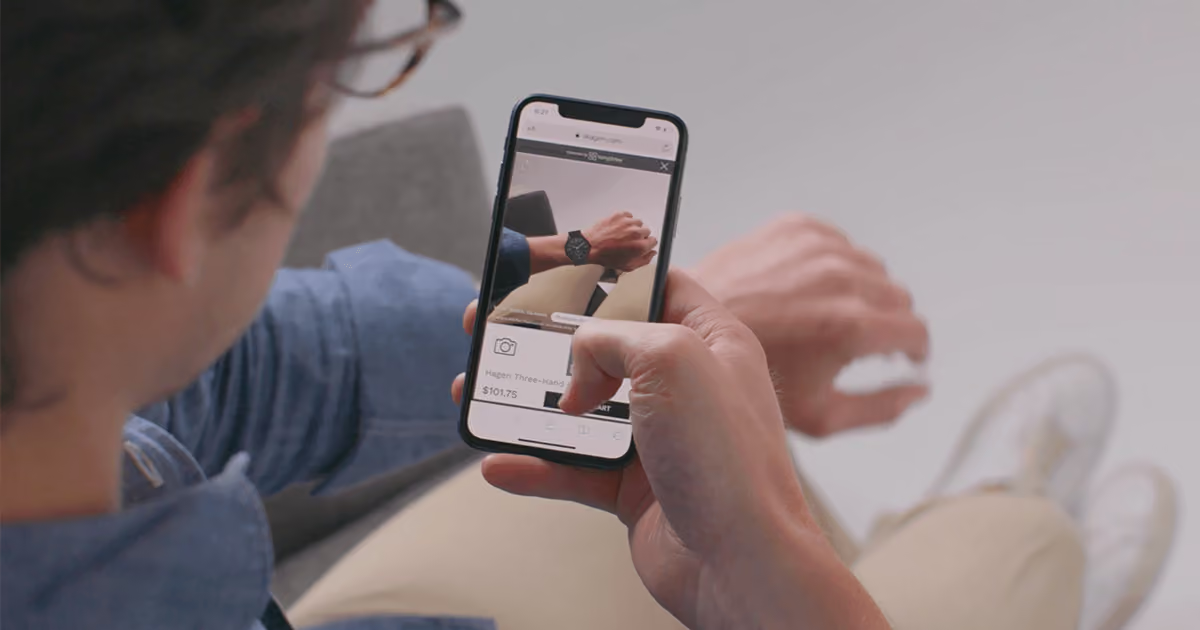
Immersive shopping provides customers with the ability to interact with products virtually. The latest AR and VR technologies furnish online stores with the capability to give customers a chance to visualize products, either on themselves using “virtual try-on,” or within their personal spaces or home environment. Consumers are also able to view products in comparison to other products or other virtual household items for size reference.

Conversion Rates - 200% Increase
Conversion rate is the number of sales divided by the number of site visits. It is important that online retailers are not only seeing an increase in site visits but generating sales from these visitors. Standard advertisements drive traffic to a website, but they cannot keep a customer engaged once on a site. With Tangiblee’s immersive shopping platform customers can interact with products as they would in a brick and mortar store.
MCM Worldwide saw a 201% increase in conversion after implementing Tangiblee. As with many luxury retailers, MCM Worldwide faced the challenge of getting consumers to purchase large items online. With Virtual Try-On, consumers can compare the product against everyday items including sunglasses, iPhones, and passports. Additionally, products can be placed on inclusive brand models. These models can be adjusted to reflect the consumer’s unique individual body type.
Revenue Per Visitor - 78% Increase
Revenue per visitor refers to the total revenue divided by the number of site visitors. Similarly to conversion rates, it is important to keep customers engaged once they enter the site. Providing an in-store experience increases the buyer’s comfort level and ultimately leads to a purchase. The Little Green Bag saw a 78.13% increase in revenue per visitor with Tangiblee. Lawrence van de Meeberg, e-Commerce Director, at Little Green Bag explained “You want to give [customers] that extra confidence to buy a product with us”. Tangiblee provides that confidence by providing on-brand lifestyle content and virtual try-on.
Return Rate - 15% Reduction
Returns can be monetarily demanding and time-intensive. Read more about returns and the new feature Tangiblee is implementing to continue to diminish return rates here. A challenge that furniture retailer, HipVan, cited was consumers’ hesitancy to buy online. Especially for high-value purchases, buyers can be reluctant to commit. Lifestyle staging and catalog comparison are just two Tangiblee features that support the buyer’s process. Consumers can compare different items to select the best style and size for their homes. Using a mobile device, consumers can place the product in their room to ensure it fits and matches their aesthetic.
HipVan, a furniture retailer, saw a 15% decrease in returns after the implementation of Tangiblee. Providing product transparency allows consumers to visualize items prior to purchase which minimizes returns. Handbag retailer, The Sak, watched return rates fall into the single digits for the first time in almost a year. Tangiblee can provide the same success to your business. To learn more about Tangiblee and receive a free virtual demo schedule here.
Speed and Scale - 5000 SKUs a Day
Tangiblee uses advanced machine learning technology that makes it possible to deliver highly engaging online shopping experiences for a fraction of the time and cost of competitive solutions. It automates the process of creating “virtual” 3D experiences without the work and resources involved in actual 3D model creation. The result is that we can serve the world’s largest catalogs and brands in days instead of weeks or months.
The answer is….
With more consumers shopping online today than ever before, retailers can no longer afford to provide flat, 2D images and a basic shopping experience. If they want to present and compete with top brands, they need to “wow” the consumer with an experience that makes the process of shopping as fun as receiving their package in the mail. If you do the math on your own business, the answer is clear. Using Tangiblee’s easy-to-implement immersive shopping experience will add significantly to your bottom line. You can’t afford to wait.
Request a quote to get started with Tangiblee today.