
Maximizing ROI With Existing Web Traffic
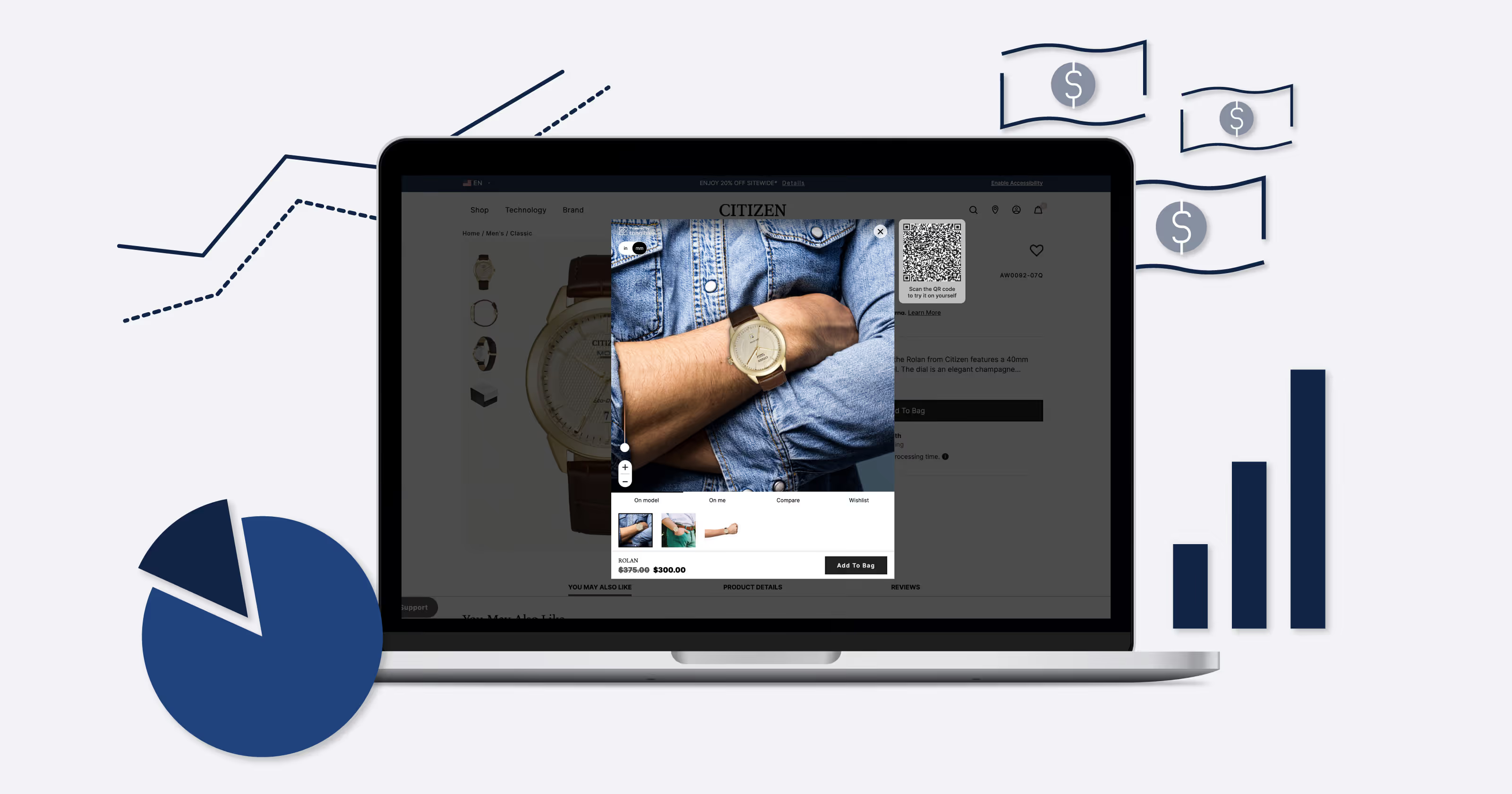
Retail e-commerce managers are always looking for ways to drive traffic to their e-commerce websites with the goal of increasing revenue from sales. However, when it comes to business success, what really matters is the bottom line, or profitability. It’s important to remember that increased revenue is only half of the profit picture, and not necessarily the metric that can have the biggest impact. During economic downturns, in fact, spending a lot of money on top-of-funnel programs without a proven Return on Ad Spend (ROAS) can be a costly mistake.
Top-line traffic only leads to revenue if your e-commerce website also has healthy conversions at the middle of the funnel. There are many programs that retail marketing departments use to acquire new customers, including running pay-per-click ads, partnering with influencers, running email marketing campaigns, and more. All of these are costly in terms of time and money. Many e-commerce businesses spend more than $10,000/month on Cost-Per-Click (CPC) ads alone and most spend more than $5000/month.
Shifting some of the budget traditionally used for top-of-funnel programs to help optimize conversions at the middle of the funnel can have many benefits:
- Lower costs: Advertising is a very expensive way to grow your sales
- Increased Revenue per Visitor (RPV): Everyone who visits your website – whether newly acquired or existing customer, regardless of channel (organic, paid, referral, etc.)
- Improved user experience: Tactics that increase conversions also tend to improve your company’s overall brand, product information, and user experience.
So, if you’re looking to drive increased conversions from your e-commerce website, the latest augmented reality (AR) and immersive experiences are proven to deliver the results you need. Case studies from a variety of large brands like Citizen, Victorinox, and Noemie tell similar success stories — increased revenue per visitor (RPV) and increased conversion rates after adding Tangiblee capabilities to their websites.
These customers have one thing in common: They all worked with Tangiblee to ensure quality user experiences, rapid implementation, ultimate scalability, and expertise they could count on. Tangiblee’s Software with a Service (SwaS) means that every client gets a dedicated account manager to handle platform maintenance. This is another huge benefit in a tough economy – no need to hire dedicated tech resources because our team helps with A/B testing and everything else you need to succeed.
By providing your customers with immersive online shopping experiences such as Stacking and Virtual Try-On, you can maximize ROI with your existing web traffic. The Stacking feature, for example, allows online shoppers to try on multiple products at once. Shoppers can create their perfect stack and then purchase all items with a few simple clicks right within the Tangiblee solution.
Tangiblee also has the ability to integrate with your existing recommendation logic to provide relevant product recommendations based on recently viewed, wishlist items, and more. No one knows your customer more than you do, so provide them with custom recommendations to increase conversions.
Finally, we work closely with you to identify which immersive shopping experience is right for your specific products and use cases. Our solutions range from a wide variety of options including Virtual Try-On (VTO), Contextual Shopping, Lifestyle Content, and much more.
To learn more about optimizing your website traffic, schedule a demo today.