
The New Customer Experience: Immersive Shopping for Online Retailers
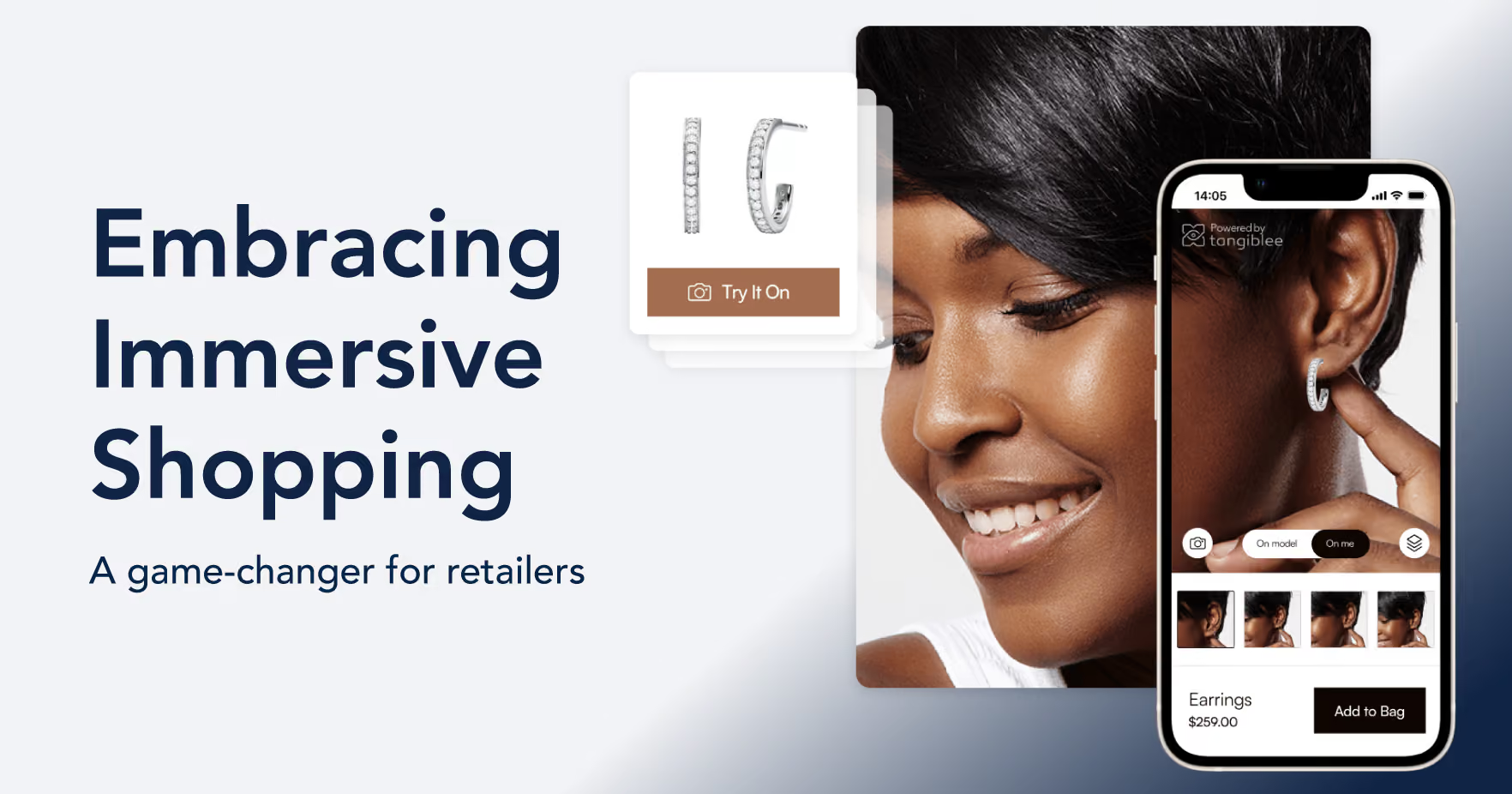
If you haven't taken the plunge into immersive shopping yet, 2024 is your year to dive in: 61% of US-based retailers have developed a virtual store, with a remarkable 91% of them subsequently seeing a moderate or significant boost in sales. Looking ahead, 55% of brands are gearing up to invest further in immersive experiences over the next three years.
Curious about what immersive shopping entails? At its core, immersive shopping leverages emerging technologies like augmented reality (AR), virtual reality (VR), and artificial intelligence (AI) to elevate the online shopping experience. Imagine adding a touch of reality to your virtual store, allowing customers to interact with products in a virtual space—that's immersive shopping in action. It’s a personalized touch paired with a way for customers to visualize how they’d use products in their everyday life.
Delving Deeper into Immersive Shopping
In the US, retailers are prioritizing four key areas: virtual stores, AI-driven personalization, gamification, and social shopping. While global adoption has been a bit slower, the tide is turning: A 2022 global study found that although fewer than ten percent of companies in consumer goods and retail are currently using immersive technologies, 25% are actively piloting immersive shopping initiatives.
The numbers speak for themselves—the immersive retail technology market is projected to skyrocket from $7.37 billion in 2023 to $42.5 billion by 2032. Consumer preferences are steering the immersive shopping ship: value-conscious shoppers seek deals and assurance of value, while luxury buyers crave a premium blend of virtual and physical retail. And, increasingly, consumers expect AR and VR to be integral parts of their online shopping experience.
Immersive shopping is an opportunity to add an additional layer of customer confidence, satisfaction, and engagement—and simultaneously improve revenue KPIs while cutting down on return rates.
Ready to go beyond traditional online retail with Tangiblee?
We understand the challenges of online shopping and we're here to help. Our sophisticated customer-facing AR and 3D visualization tools take guesswork out of the equation—by extracting data from your catalog, our software generates product images and 3D visualizations on the fly. Plus, our software seamlessly integrates into your backend without affecting site performance for a true plug-and-play solution.
We've expanded beyond accessories, apparel, and home decor to cover sectors like department stores, fitness equipment, and pet supplies—we’re committed to tailoring our solutions to the unique needs of each client.
The future of retail is immersive, and we’re bringing the future to you: schedule a free demo to see how Tangiblee can answer your product visualization needs for retail.