

How HOBO Improved Bag Discovery and Shopper Confidence
How HOBO Improved Bag Discovery and Shopper Confidence With a Product Experience That Answers Before Shoppers Ask
View Rate after switching to Tangiblee Embedded
Engagement Rate across PDP sessions after switching to Tangiblee Embedded
The amount of transactions after switching to Tangiblee Embedded
A bag is never just an accessory. It carries the things people move through life with every day — a wallet, phone, keys, makeup, chargers, receipts, plans, and small necessities that quickly add up. It is both a functional object and a personal one, often chosen not for a single moment, but for years of everyday use.
That is why the way a brand presents a bag online matters.
When shoppers are left asking basic questions — How big is it really? What fits inside? Will this combination feel right? — the product page is asking the customer to do too much work. A better shopping experience shows respect for the customer’s time and attention. It helps them understand the product clearly before doubt turns into hesitation.
HOBO Bags shows how Tangiblee-powered product discovery can be added in a way that feels seamless, elevated, and fully consistent with the brand.
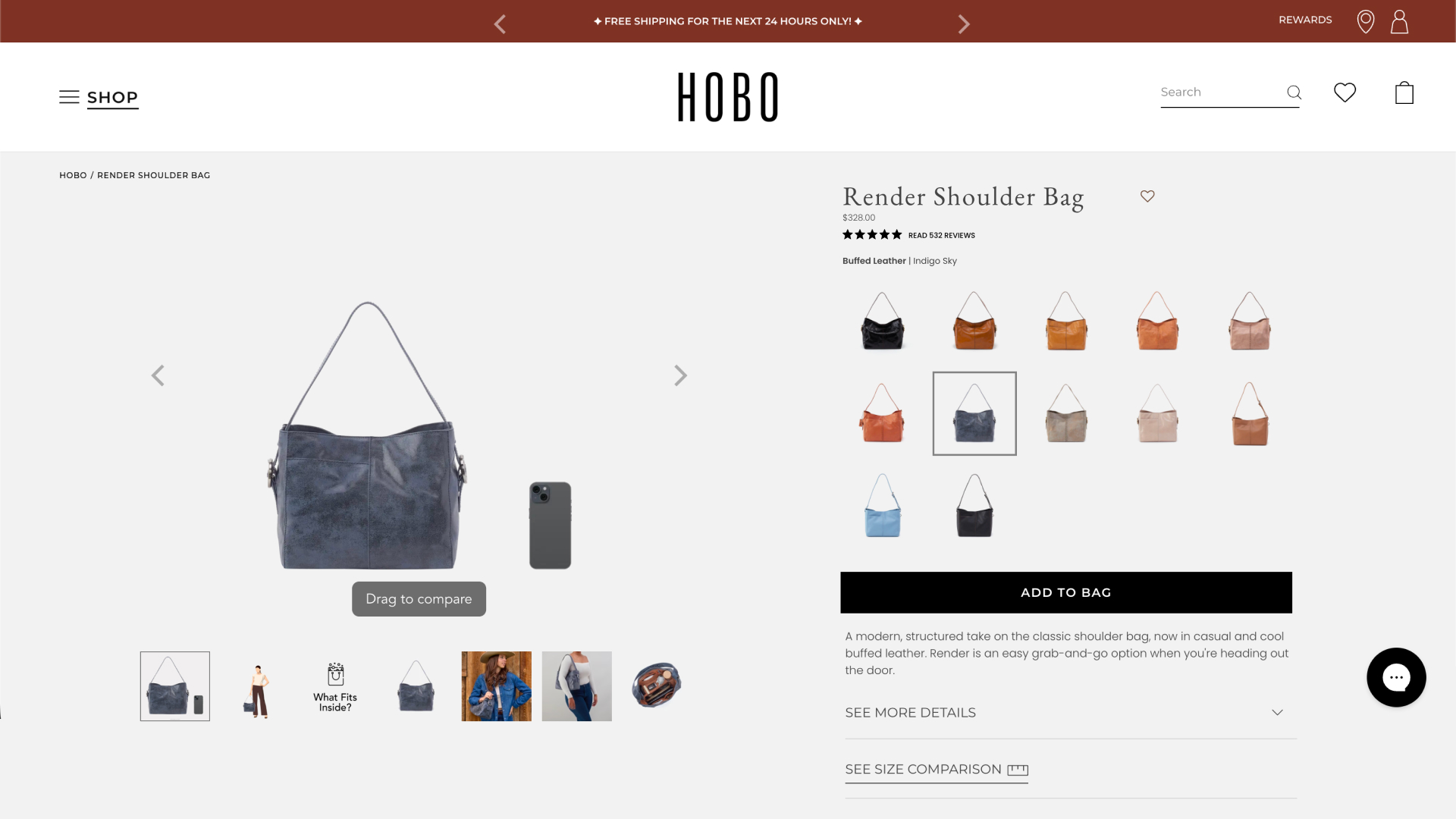
The result is a product page that does more than present a bag.
It helps shoppers understand it, imagine it, and make a confident decision.
From personalization to product understanding
HOBO’s approach starts where many brands are now focusing: personalization and styling. But what makes this attitude powerful is what comes next.
Once a shopper is engaged in styling and personalization, the next natural questions are no longer about aesthetics — they are about practicality:
- How big is this bag?
- Will it fit what I need?
- How will it look when I carry it?
HOBO answers these questions directly within the same Tangiblee-powered experience ecosystem.
Moving beyond static bag PDPs
Instead of relying on size charts or technical descriptions, HOBO integrates product understanding directly into the browsing flow with Tangiblee.
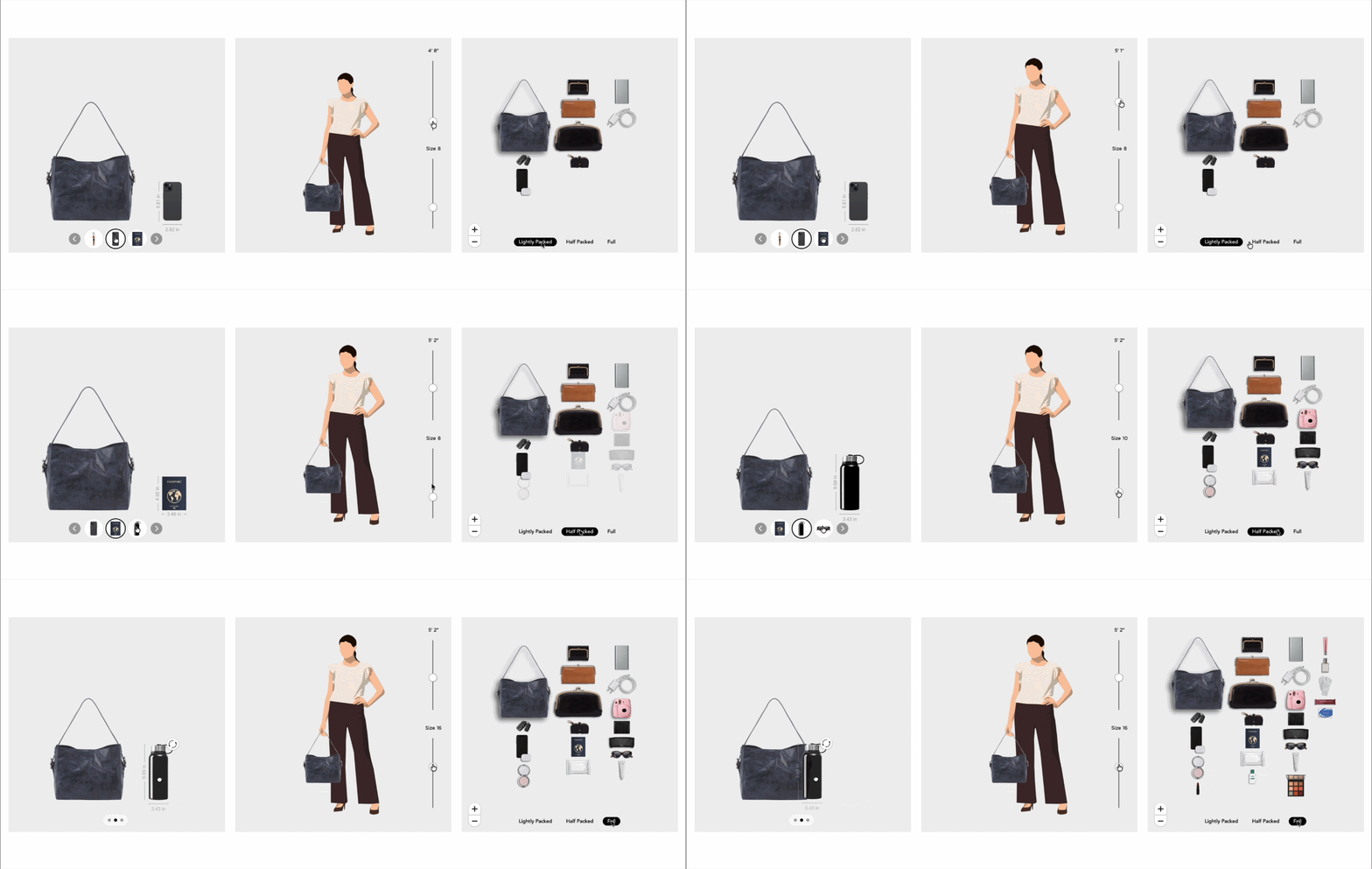
As shoppers move through the product image carousel, they encounter Tangiblee-powered visuals that explain the bag in a real-life context.
With Tangiblee’s What Fits Inside, shoppers can see how the bag performs across three everyday scenarios — lightly packed, moderately packed, and fully packed — turning abstract dimensions into something immediately understandable.
With Tangiblee’s silhouette visualization, they can see how the bag looks when worn, selecting different model heights to understand proportion and scale.
And with Compare, they can quickly understand how one bag relates to other styles in the collection.
All of this is embedded directly into the product page — not hidden behind tabs or additional clicks.
The experience follows the shopper’s natural thought process:
.png)
Why placement changes everything
One of the most important insights from HOBO’s experience is not just what is shown, but where it is shown.
When Tangiblee’s Fits Inside was placed below the add-to-cart section, only a small percentage of shoppers interacted with it. But once the Tangiblee experience was embedded directly into the product image carousel — where shoppers naturally spend their time — engagement changed dramatically.
The share of shoppers viewing the experience rose from just over 2% to nearly 22%, representing more than a tenfold increase. Engagement also climbed sharply, increasing nearly sixfold across PDP sessions. Transactions from shoppers who viewed the Tangiblee experience increased by roughly six times as well, though seasonal factors may have contributed in part.
This reinforces a simple but powerful idea:
Tangiblee-powered product understanding works best when it meets shoppers where they already are.
Why this matters for bag ecommerce
For bags, the challenge is rarely inspiration. If a shopper has reached the product page, they already like the product.
What holds them back is uncertainty: Is the size right for my needs? Will it feel too small or too large? Do the accessories make sense together?
When those questions are answered clearly, the path to purchase becomes much shorter.
Tangiblee helps brands like HOBO answer those questions visually and intuitively through embedded experiences designed for real shopper behavior.
That not only supports stronger engagement, but also helps drive:
- stronger shopper confidence
- better discovery of add-ons like charms and straps
- a higher likelihood of conversion
- increased average order value
What other brands can learn from HOBO
HOBO’s approach reflects a broader shift in e-commerce.
Shoppers do not just want to browse products — they want clarity, context, and confidence. Personal taste will always remain subjective. But uncertainty around size, capacity, and real-life usability is not.
That uncertainty can be removed.
By working with Tangiblee to launch What Fits Inside, silhouette visualization, and Compare, HOBO created a shopping journey that feels intuitive, complete, and aligned with how customers actually make decisions online.
HOBO’s work with Tangiblee shows what happens when a brand moves beyond static merchandising and starts designing for clarity.
For Tangiblee, that is what better visual commerce is all about: helping brands answer before shoppers ask.
Bring Your Catalog to Life
Experience the power of interactive product content.